

Okay, I need to start this one with a VERY important disclaimer:
I love painting furniture. 😂
Like… obviously.
Painting furniture is part of how MegMade started. We have taken SO many pieces that someone was completely over and given them an entirely different life with paint.
And honestly? It’s still one of my favorite transformations.
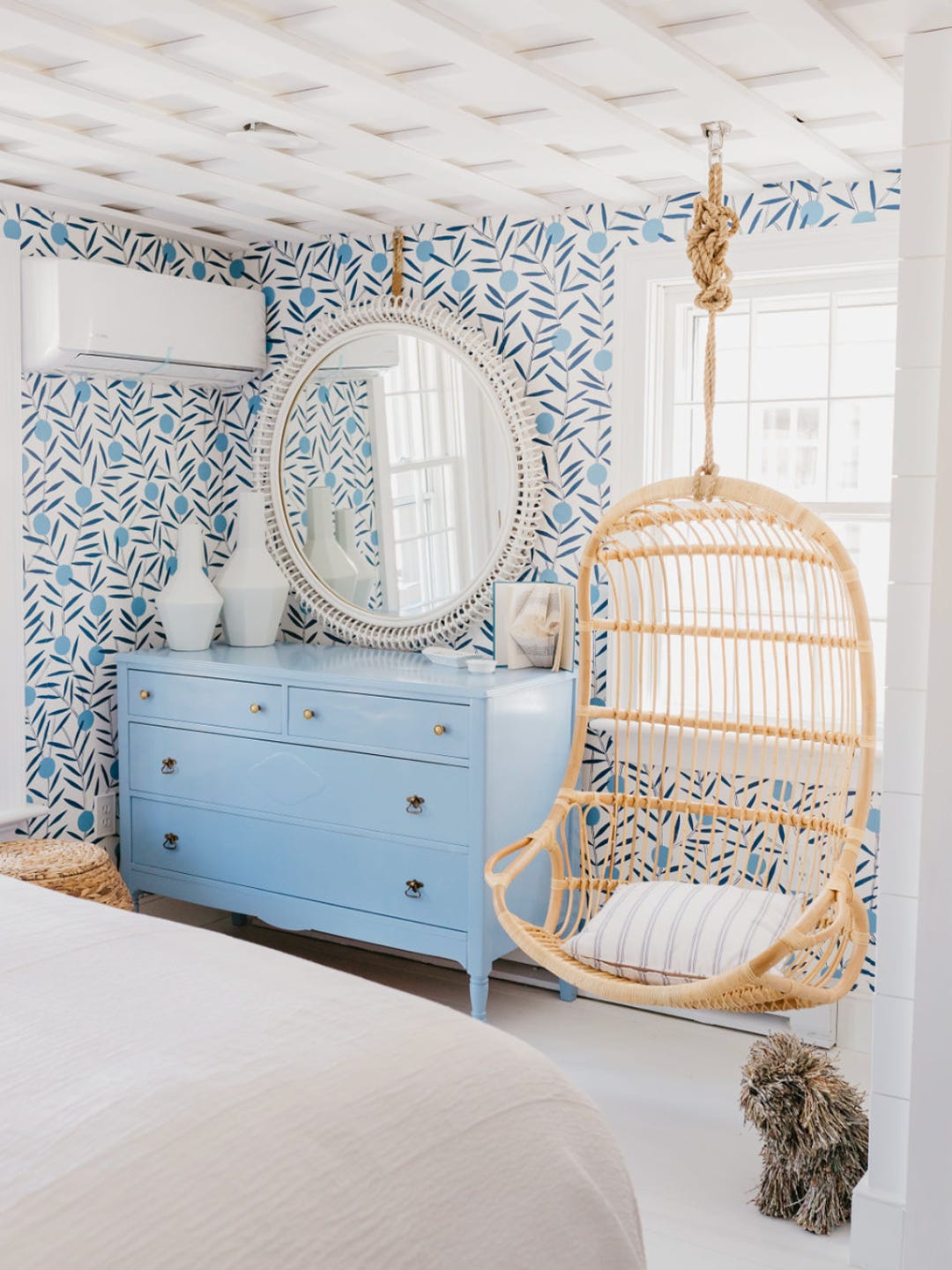
Give me an old dresser with great lines and a terrible finish and tell me we can paint it a muddy green?
I’m in.
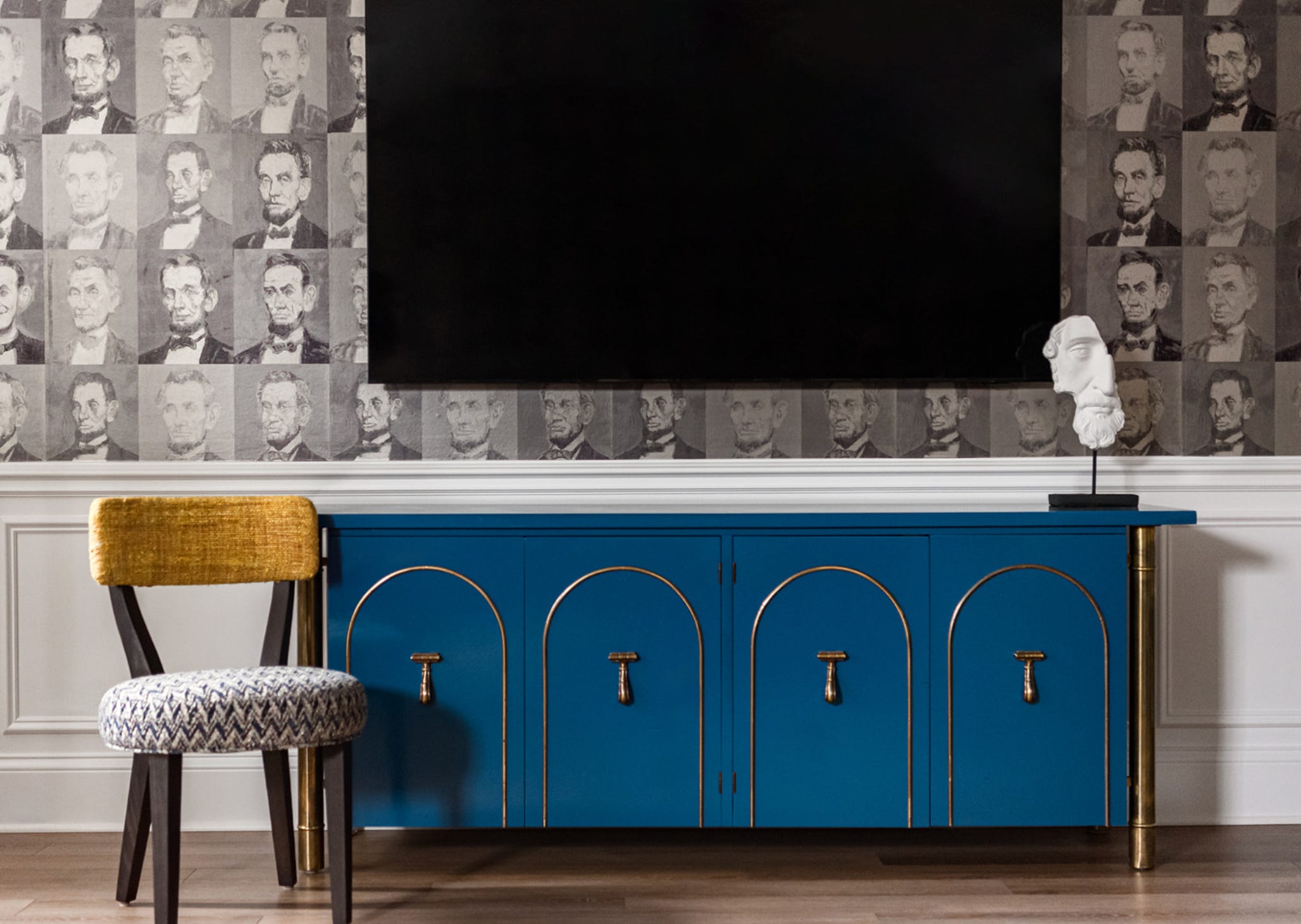
A lacquered navy buffet? Yes.
A dresser in a color you’d never be brave enough to put on your walls? Even better.
Paint can make you notice the shape of a piece instead of the wood. It can bring color into a room. It can make something you’ve owned for twenty years suddenly make sense again.
So this is NOT me saying:
“Stop painting wood furniture!”
Please. 😂
This is me saying something I’ve learned after years and years of doing this:
You have to know WHEN to paint it.
Because sometimes paint is absolutely the transformation.
And sometimes...
the wood is.
Sometimes brown isn’t the problem.
I can’t tell you how many pieces we’ve seen where someone’s first reaction is:
“Can we just paint it?”
And listen - I understand.
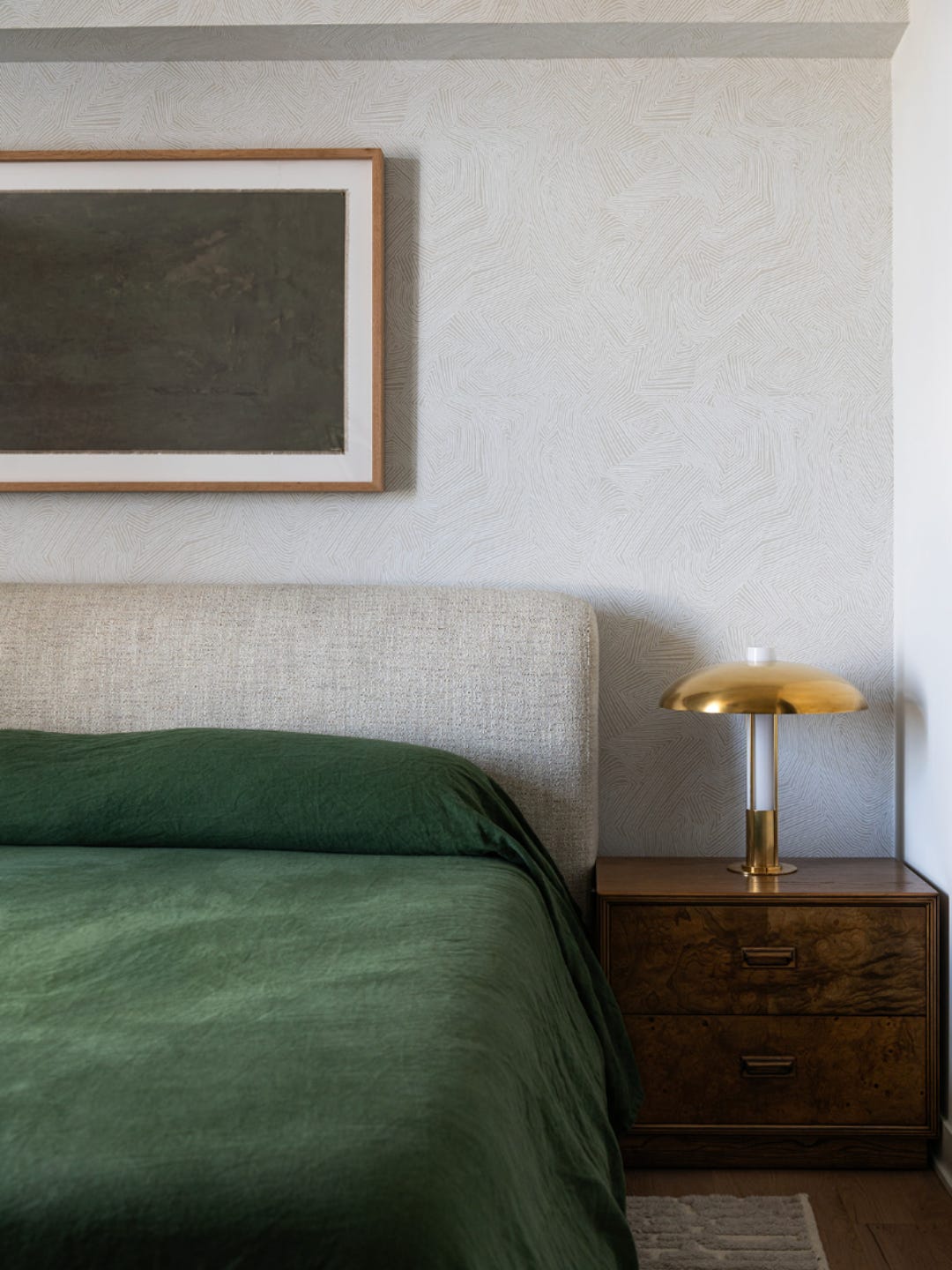
Sometimes brown furniture can feel heavy. Sometimes the finish is orange. Sometimes it’s too red. Sometimes it’s SO dark that you can’t even really see the grain anymore.
But before I decide anything, I want to know:
What is underneath that finish?
Because the wood and the color currently sitting on top of it are not necessarily the same thing.
Sometimes we’ll strip a piece and suddenly this beautiful grain starts showing through and I’m like...
OH. There you are.
Maybe the answer wasn’t covering the wood.
Maybe it was bringing it back.
A different stain can completely change how that piece reads in a room while still letting you see all the movement and character that made the wood beautiful in the first place.
You can take something that feels orange and make it rich and brown.
Something really dark can sometimes come back warmer and lighter.
Something tired can look fresh again without losing the little details that tell you it’s an older piece.
And that’s what I love about refinishing.
You’re not always trying to make an old piece look brand new.
Sometimes you’re just bringing back what was good about it in the first place.
And then there are pieces where I’m like: PAINT IT.
Absolutely.
Not every piece of wood furniture needs to become some sacred preservation project.
Some pieces just have GOOD BONES.
Great shape.
Great proportions.
Cute little feet.
Beautiful hardware.
But the wood itself?
Meh.
That’s when paint can be MAGIC.
We’ve had so many clients bring us pieces that technically worked perfectly fine, but they just didn’t want them in their homes anymore.
And I LOVE those projects.
Because sometimes the solution isn’t replacing the piece.
It’s making it exciting again.
And color can do that in a way stain can’t.
A painted piece can become the moment in an otherwise neutral room.
It can break up a room that already has a ton of wood.
It can make an older piece feel playful instead of formal.
And sometimes it lets you keep something that matters to you without feeling like you’re designing your entire room around Grandma’s 1987 furniture. 😂
That’s a win.
But dining tables? I’m looking at those differently.
This is one place where we’re pretty opinionated at MegMade.
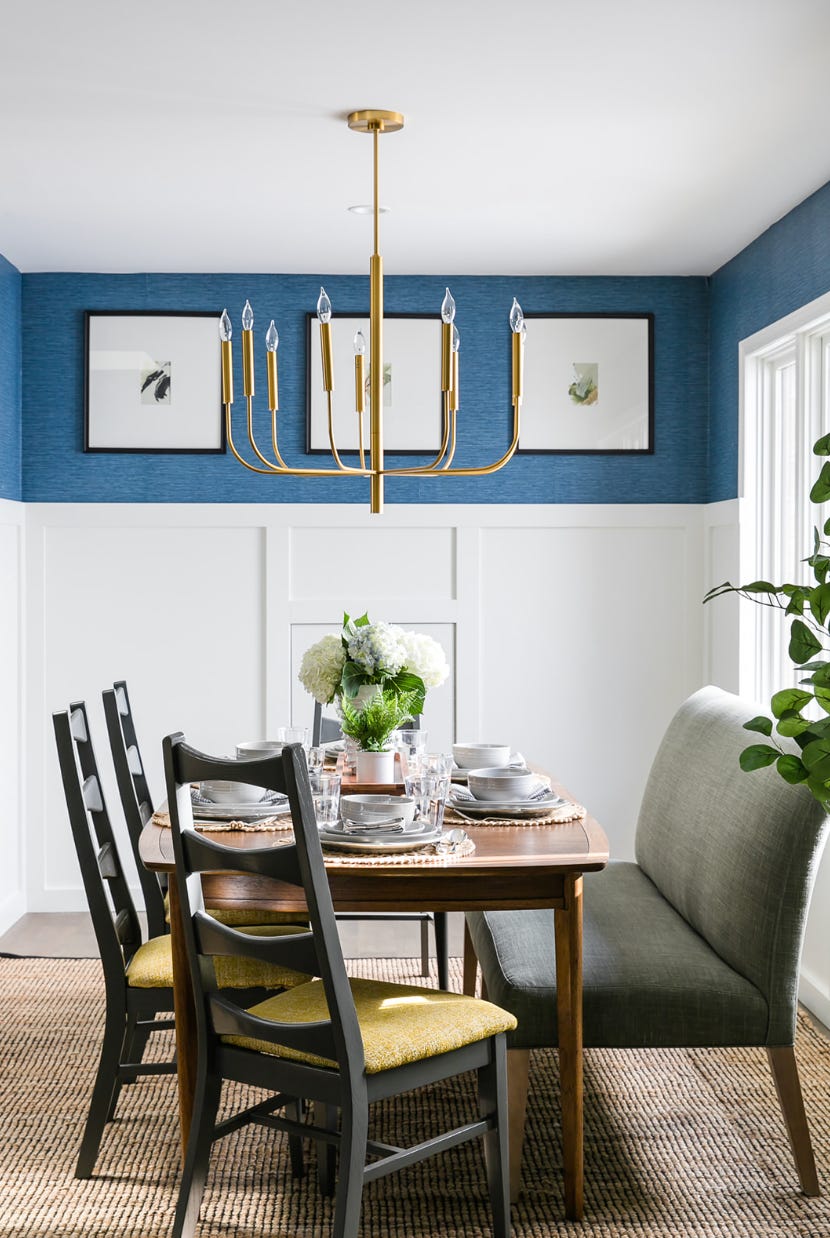
We don’t paint the tops of dining tables.
We’ll paint the base.
We’ll paint the legs.
We’ll completely change the color underneath.
But that tabletop?
We’re staining it.
And there are two reasons I love doing it that way.
First, a dining table gets USED.
Kids doing homework.
Dinner every night.
Hot plates.
Cold glasses.
Someone inevitably spilling something.
Craft projects.
Keys.
Serving dishes.
And if you have kids, apparently occasionally things happening at the dining table that no dining table manufacturer could have possibly anticipated. 😂
A dining table is one of the hardest-working pieces of furniture in your home.
So when we’re refinishing one, we want a finish system designed for that kind of wear and we want to preserve the beauty of the wood underneath it.
But there’s another reason:
That big expanse of wood is BEAUTIFUL.
On a tabletop, I want to see grain.
I want variation.
I want depth.
Stain lets us change the color dramatically without hiding what makes the material interesting.
Then the appropriate protective finish is what helps that surface stand up to everyday life.
So maybe your table currently has that yellow-orange finish you can’t stand.
That doesn’t automatically mean:
Paint it white.
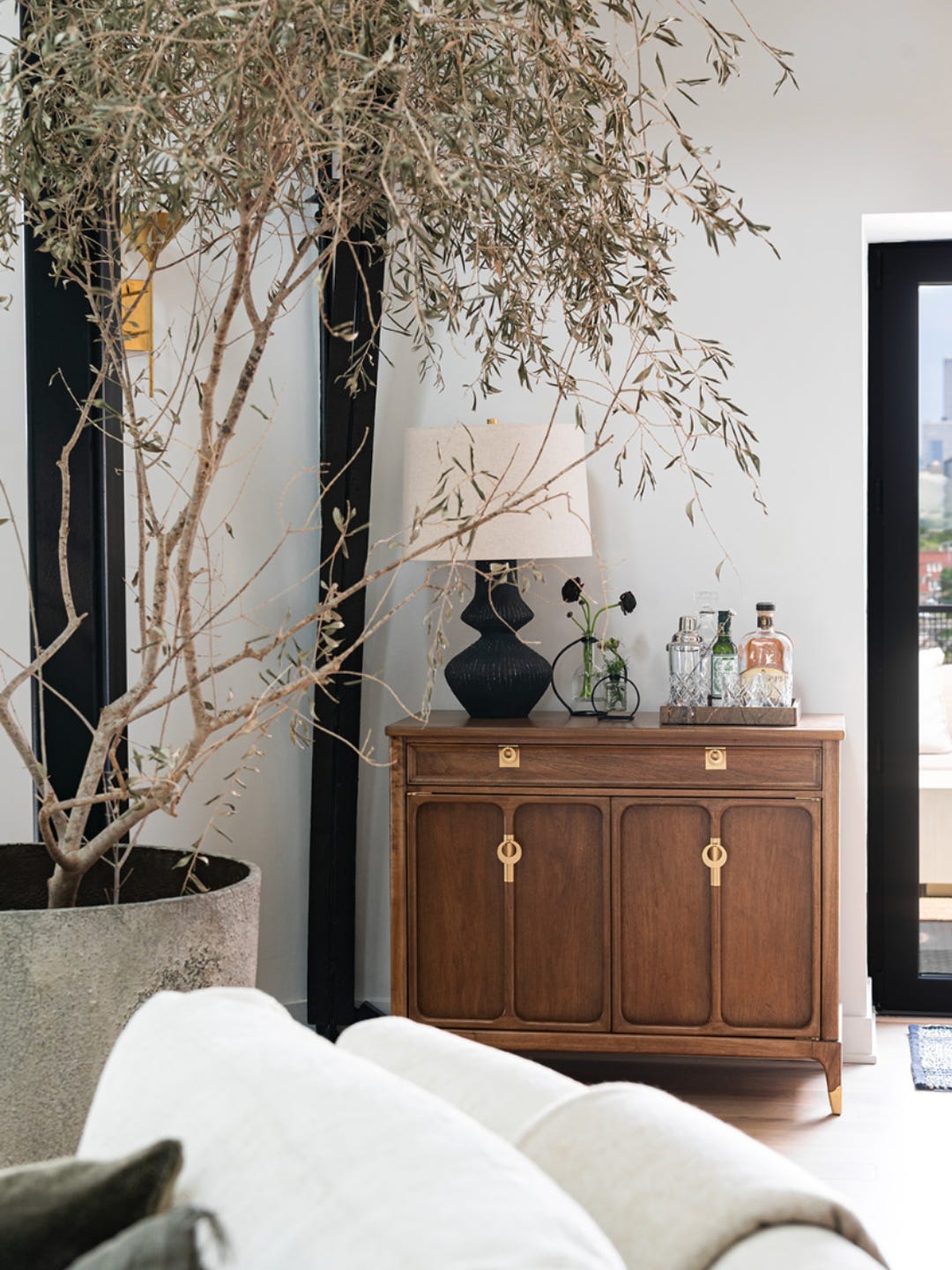
Maybe we strip it, find the beautiful wood underneath, give it a gorgeous rich brown stain, protect it properly and suddenly...
you have the table you wanted all along.
Same table.
Completely different feeling.
Sometimes the transformation is BIG. Sometimes it’s barely a transformation at all.
And honestly?
I love both.
There is NOTHING more fun than taking a brown dresser and painting it an incredible blue, lacquering a piece in a color you’d never expect, or putting a wild fabric on a chair that completely changes its personality.
Give me a dramatic before-and-after any day. 😂
But the longer I’ve worked with furniture, the more I’ve realized that not every piece needs the same kind of transformation.
Sometimes we strip a piece down and discover beautiful wood underneath.
Sometimes the stain just needs to be warmer, richer or less orange.
Sometimes the finish is scratched, faded or cloudy, but everything else about the piece is already SO good.
So we bring it back.
Refresh the stain. Revive the color. Repair what needs repairing. Give it the right sheen. Protect it so it can actually be used again.
And other times?
We completely reinvent the thing.
Paint it. Lacquer it. Change the hardware. Reupholster it in something FUN. Make it almost unrecognizable.
Neither transformation is better.
The fun is figuring out how far the piece needs to go.
Sometimes I want you to look at the finished piece and say:
“Wait… THAT’S the same dresser?!”
And sometimes I want you to say:
“I forgot how beautiful this was.”
Both are pretty great before-and-afters in my book.
And THEN there are the pieces where I will make you step away from the paintbrush. 😂
This is where experience really matters.
Sometimes you start looking closely at a piece and realize...
Wait.
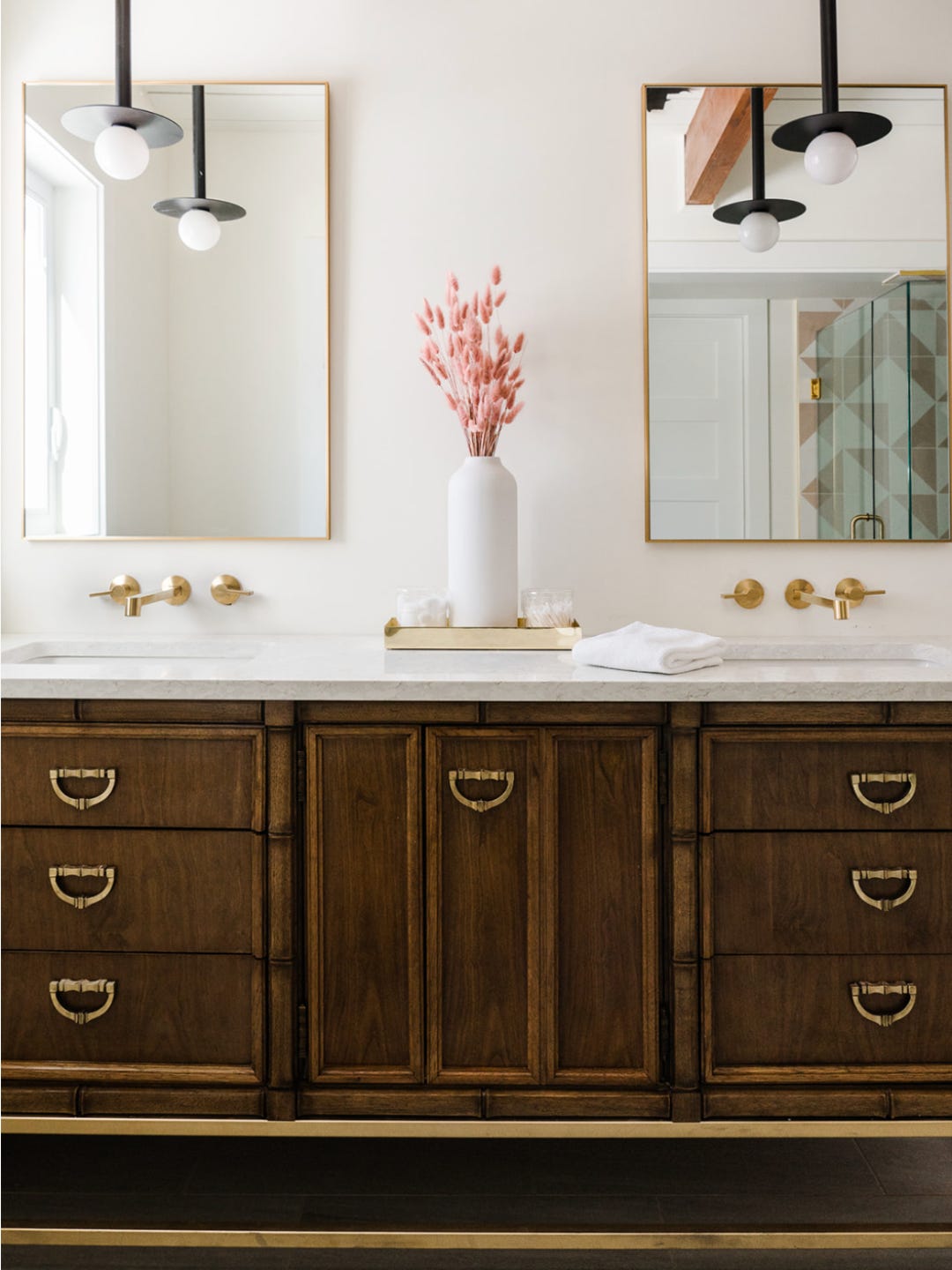
This is GOOD.
Beautiful walnut.
Incredible grain.
Original details.
Old hardware.
Really beautiful craftsmanship.
A finish that’s developed character over decades.
Or potentially a legitimate antique where the original material and finish are part of what makes the piece special.
That’s when I want to know what we’re dealing with before we make any permanent decisions.
Not because old automatically equals valuable.
It doesn’t.
And not because painting old furniture is some kind of design crime.
It absolutely isn’t.
But if the wood, craftsmanship, provenance or original finish is significant?
That’s information we should have BEFORE we change it.
There is a difference between giving an ordinary old dresser an amazing new life...
and accidentally covering something that was special exactly as it was.
I also look at everything ELSE in the room.
This is such a big part of the decision.
Let’s say you have:
Wood floors.
Wood dining table.
Wood chairs.
Wood kitchen cabinetry.
Wood console.
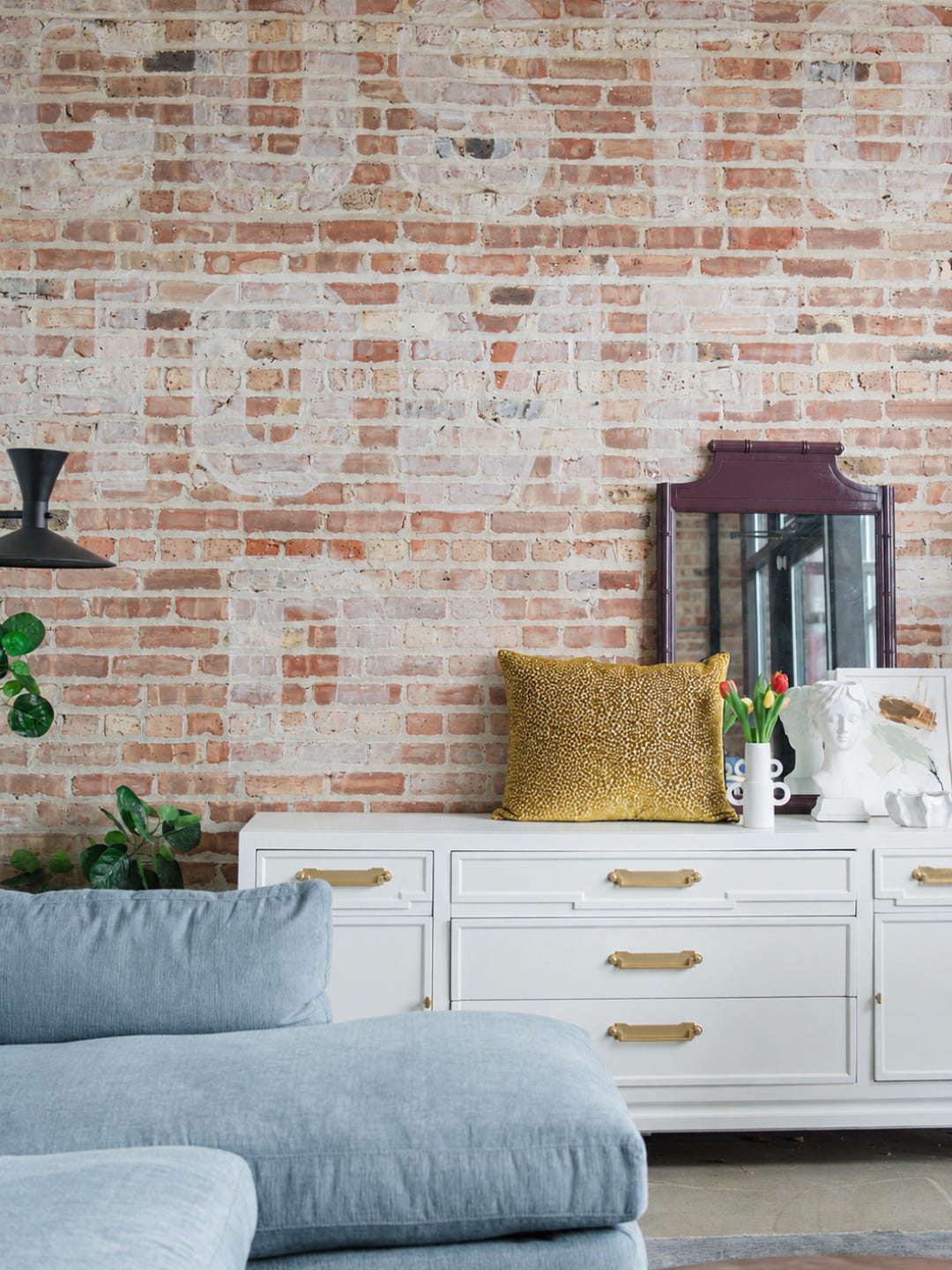
And now we’re talking about adding another giant brown buffet.
I love wood, but at some point I’m like...
Okay. We have established that we enjoy trees. 😂
PAINT THE BUFFET.
That might be exactly what the room needs.
Now flip it.
Maybe your room has painted cabinetry, upholstered furniture, light walls, a painted coffee table and lots of soft fabrics.
That vintage wood chest you’ve been thinking about painting?
Maybe DON’T.
Maybe that little hit of brown is exactly what’s going to ground the whole room.
This is why there isn’t one answer.
I’m looking at the piece.
I’m looking at the wood.
I’m looking at how you’re going to use it.
And I’m looking at the room.
They all get a vote.
Paint and stain do completely different jobs.
This is probably the simplest way I can explain how I think about it.
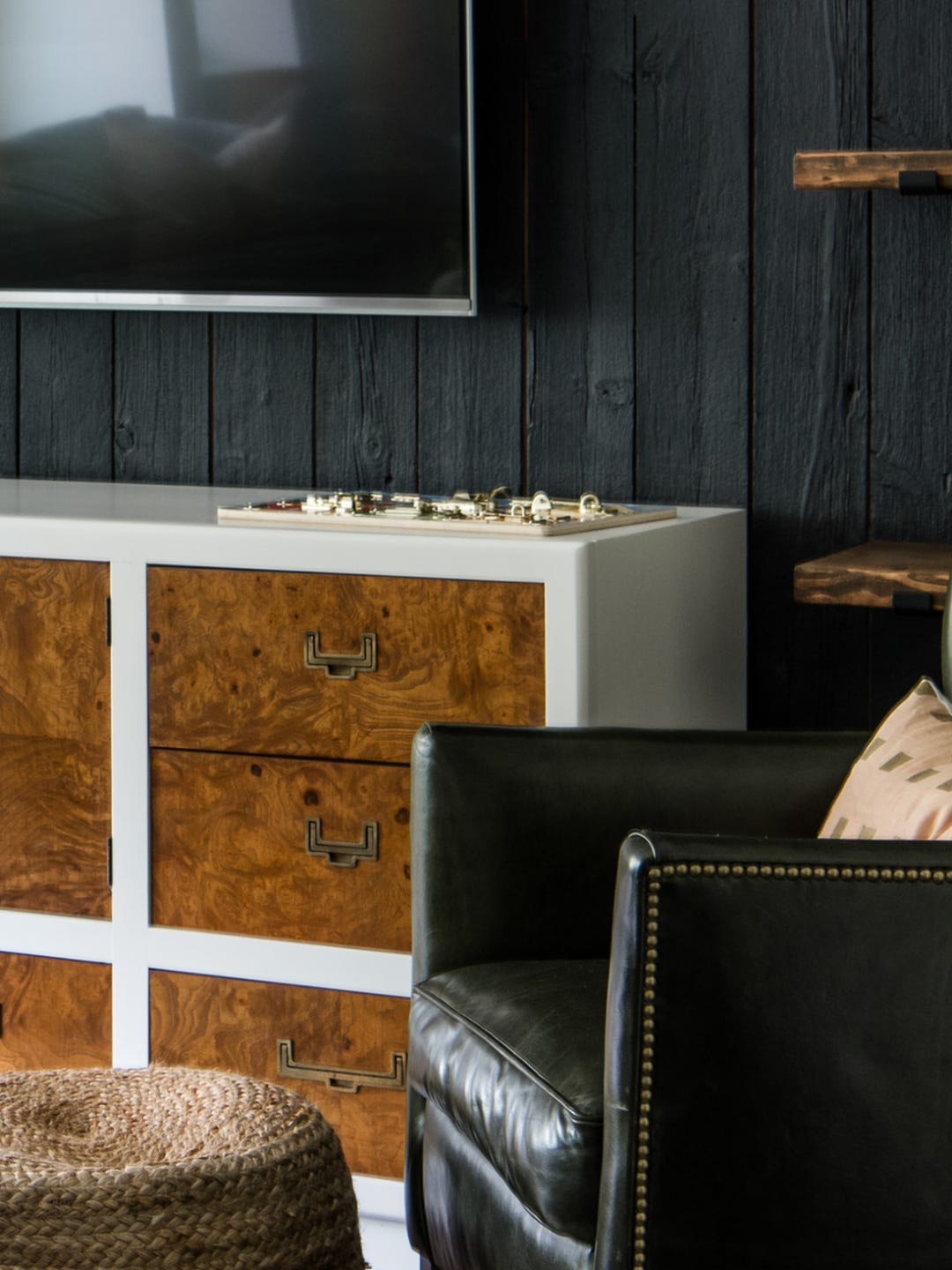
Paint says: LOOK AT THE COLOR AND THE SHAPE.
Stain says: LOOK AT THE WOOD.
That’s obviously simplified, but it’s a really helpful place to start.
Do I want this dresser to be an incredible green moment against the wallpaper?
Paint.
Do I have a beautiful old chest with gorgeous grain and I just hate how orange it looks?
Let’s talk stain.
Does the room desperately need warmth?
Maybe I want wood.
Does the room already feel brown and heavy?
Maybe paint gives us the break we need.
Is it a heavily used tabletop?
Now durability and the finishing system become a much bigger part of the conversation.
The finish should make sense for the furniture AND for your life.
And this is probably what all these years of furniture have taught me.
Don’t decide what a piece needs because of what it looks like right now.
That’s the trap.
Look at what it could be.
Sometimes that’s glossy blue paint.
Sometimes it’s stripping away decades of finish and discovering beautiful wood underneath.
Sometimes it’s keeping it brown but making it a MUCH better brown. 😂
Sometimes it’s painting the base and staining the top.
Sometimes it’s simply restoring what’s already there.
That’s why I still get excited when someone sends us a photo of some random dresser they’ve had forever.
Because I immediately start thinking:
Okay... what could we do with THIS?
And half the fun is figuring out the answer.
Meg’s Tuesday Tip
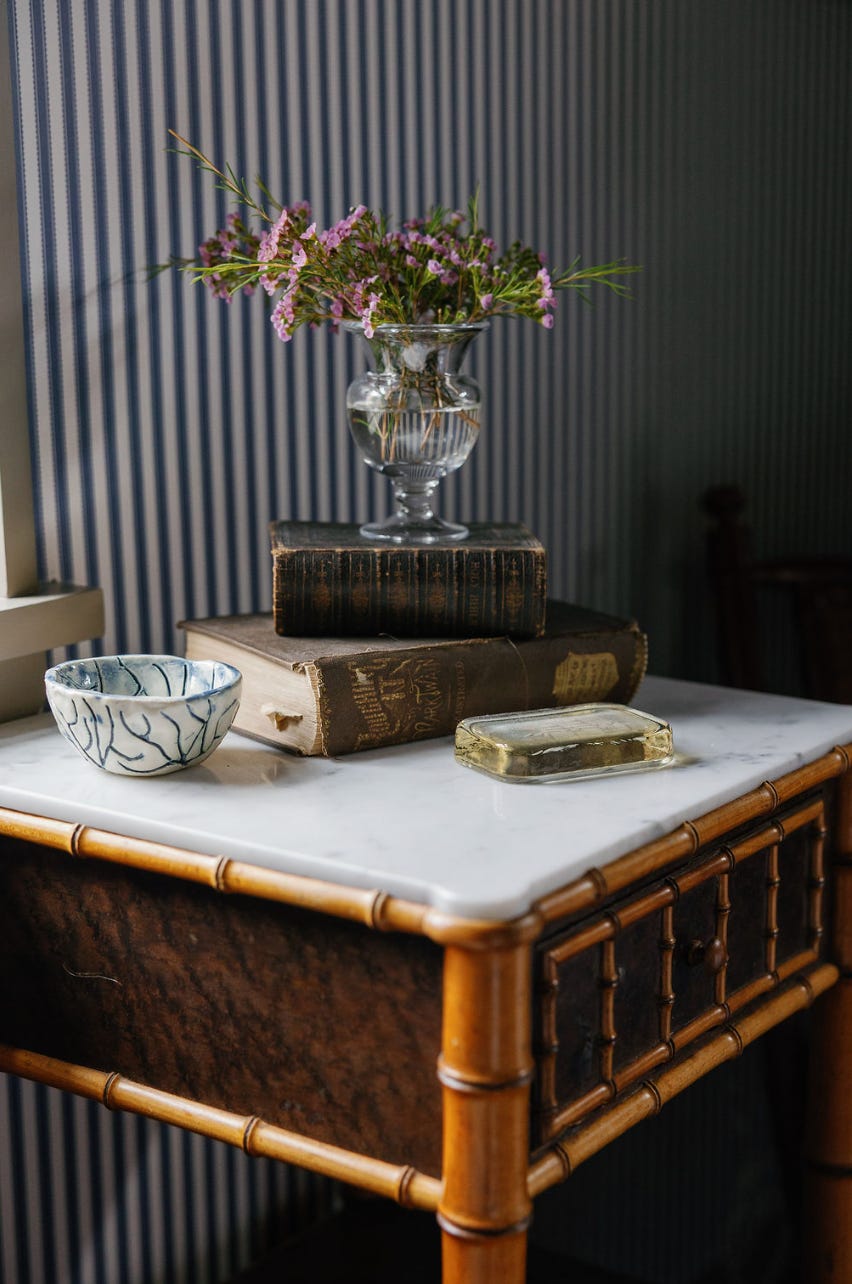
Before you decide to paint OR stain a piece, ask:
What am I actually trying to change?
The color?
The wood?
The feeling?
The condition?
Or am I just tired of looking at it?
Then look a little closer.
If the wood is beautiful, maybe we find a stain that lets it shine.
If the wood isn’t the star but the shape is amazing, paint might completely transform it.
If the piece is already beautiful but tired, maybe it doesn’t need a makeover at all.
Maybe it just needs to be brought back to life.
And if you have no clue which one it needs?
That’s okay.
Honestly, that’s one of my favorite conversations to have.
Before you give up on that piece...
Our Customer Owned Piece Sale is happening through August 31, which feels VERY appropriate after this conversation. 😂
If there’s a piece in your house you’ve been staring at thinking...
Do I paint this?
Could this be stained darker?
Can you fix this finish?
Is this even worth doing?
Send us a photo and the dimensions.
We’ll help you figure out what makes sense for the piece, not just automatically cover it in paint.
And if paint IS the answer?
Ohhh, we’ll have fun with it. 😂
Through August 31, it’s 15% off one Customer Owned Piece and 20% off two or more.
Maybe it’s something sentimental.
Maybe it’s just a really great Facebook Marketplace find.
Maybe you’ve owned it forever and are completely sick of looking at it.
Before you replace it, let’s see what it could become.
Because sometimes the best new piece for your home...
isn’t new at all. 🤍
Xoxo,
Meg
Leave a comment